My doctoral research focuses on the representation of religion in fantasy-fiction media, in particular video games and film/series media. This series studying the representation of religion in the Borderlands video game universe is intended to be a practice run for my research. I did not select Borderlands itself for my doctoral study.
See Analyzing Religion Through Video Games: Bandit Religion and Kincaid’s Shrine (Borderlands 2) (Part 2)
___________________________________________________
Why Borderlands?
I have selected Borderlands for this series because I am myself an avid video gamer and a fan of the series, having played all the major releases, along with much, although not all, of the downloadable content (DLC).
I therefore have good memories through my experiences with this series and, very importantly for any researcher, a familiarity with important aspects of it, including the visuals, symbols, gameplay experience, content pertaining to the game’s universe and its non-playable characters (NPCs), the antagonists and protagonists, lore, and more.
Before further analyses, it is important that we know just a little about the Borderlands itself.
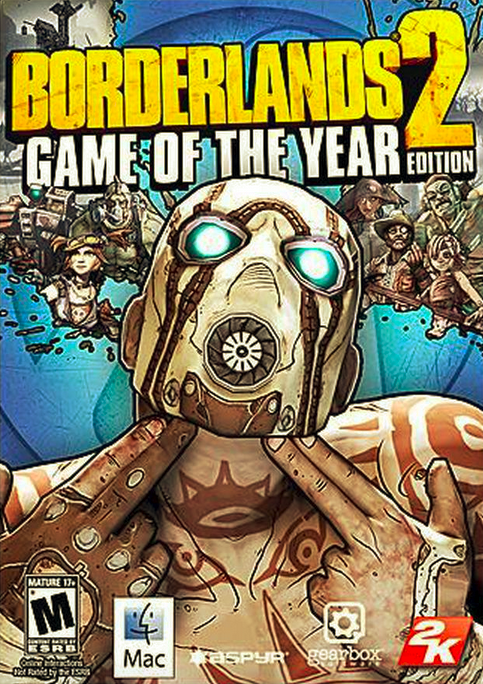
The Basics of the Borderlands Series
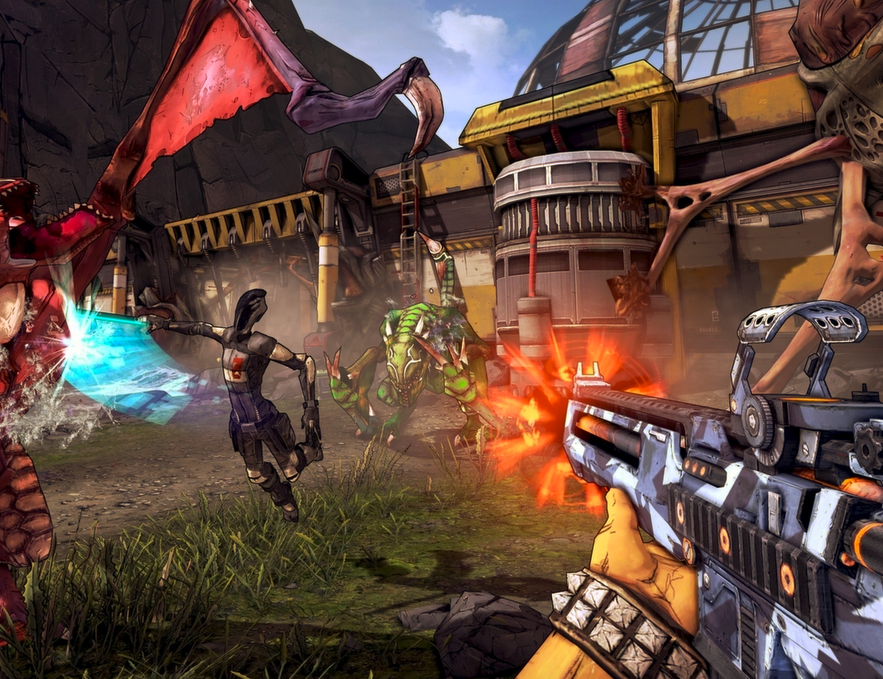
Borderlands is a popular first-person action role-playing video game franchise of the “looter-shooter” genre.
This popular genre of video game incorporates gameplay elements heavily prioritizing procedurally generated weapons and equipment. The gameplay loop is addictive and has players obtaining and collecting progressively superior items through “grinding” (the practice of repeating the same actions to accumulate points in order to gain experience or advance to the next level) for random drops. Over time, the player’s character grows in strength and ability through accumulating skill points by leveling up and using newly acquired gear.
Being a “looter” means that the player’s primary goal is to collect as much gear as possible: an assortment of guns, equipment, armor, accessories, and resources. As a “shooter,” Borderlands puts players in the first-person perspective in which they experience the gameplay directly through the eyes of their character. The weapon itself is always visible on the screen, as if players are holding the weapon themselves. Borderlands has perfected the looter-shooter gameplay loop and can be considered the poster child for the genre itself.
Borderlands was created and produced by Gearbox Software and published by 2K for multiple platforms and has met significant commercial success since its inception. The first game was released in 2009, followed by the second release in 2012. 2014 saw the release of Borderlands: The Pre-Sequel, and Borderlands 3 became the most recent version, playable in 2019. Borderlands 4 is currently being developed and is expected to come out in 2025.
Borderlands contains a post-apocalyptic science fiction setting combining both antiquated and futuristic elements. Its art style is unique, clearly distinguishing it from most other video games. The comic book and hand-drawn aesthetic utilize the bold outlining of flat images and a vibrant color palette, despite the many browns and yellows of the world’s parched chief desert region, the planet of Pandora. Combining these artistic choices gives Borderlands a unique hand-drawn aesthetic.
In terms of narrative, the player takes on the role of a Vault Hunter, a mercenary who searches the desert planet of Pandora for riches and wealth located in vaults.
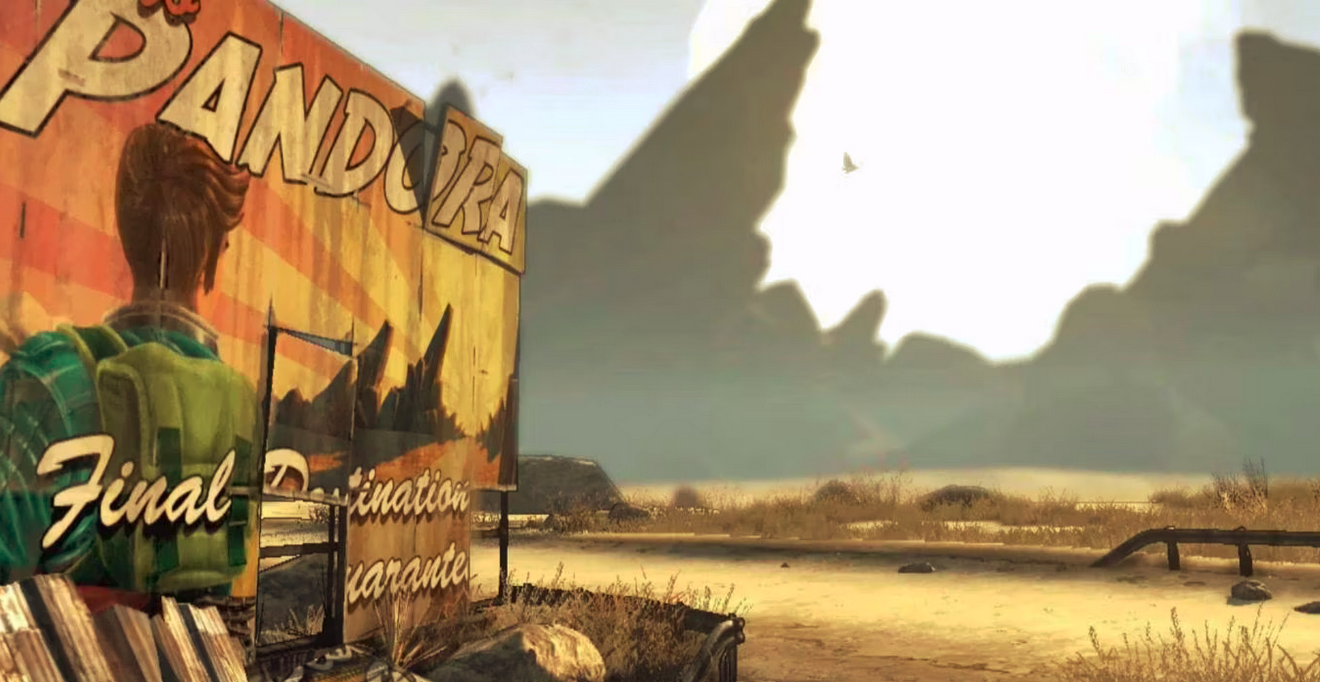
Because Pandora is believed to be rich with mineral wealth, several interstellar megacorporations tried to colonize it, only to discover little of value on its dusty surface and among the rocky crags beyond undecipherable alien artifacts from a long-extinct race, the Eridians. To make matters worse, Pandora is littered with dangerous alien life. The megacorporations left the planet, leaving behind their workforce, former prisoners coerced into employment who became violent bandits and raiders.
Closer inspection of the artifacts, however, reveals the presence of Eridian vaults filled with treasure and wealth, which are guarded by extremely powerful and ancient creatures. The megacorporations decide to return to Pandora, along with a number of Vault Hunters, in search of these vaults.
The playable locations and settings are expanded to include the moon of Pandora in Borderlands: The Pre-sequel and other planets in Borderlands 3, where further Eridian vaults were found.
Some Theory and a Cursory Overview of Religion in Borderlands
According to the creator of the Borderlands universe, Matthew Armstrong, the development team needed to think through various serious themes like religion and sexuality and how it would implement these in the Borderlands’ world. But as Armstrong explains, religion was not a primary focus: “We don’t delve heavily into religion. We don’t want to have to invent religion. That tends to ring false a lot of times. It’s very tricky, so we don’t touch on that too much” (Butterworth 2014).
That said, religious themes are yet frequently represented in the Borderlands series.
Frank G. Bosman (2019) has offered a typology of five (mutually non-exclusive) “shapes,” or ways in which religion is encountered in video games by players: [1] material, [2] referential, [3] reflexive, [4] ritual religion, and [5] gaming as religion or as a religious act.
- [1] Material religion is the most obvious form encountered by players and includes religious artifacts, buildings, clothes, items, etc.
- [2] Referential religion entails an implicit or explicit reference in a video game to an existing religious tradition existing externally to it.
- [3] Reflexive religion is reflection within the video game on existential ideas traditionally associated with religion.
- [4] Ritual religion is when players engage with in-game activities that are traditionally associated with religion, which can be either intended by the developers or happen spontaneously.
- [5] Gaming as religion is when the experience of gaming is identified as religious (by scholars and/or the gamers themselves).
As this series will demonstrate, [1], [2], [3], and [4] can all be found in Borderlands. To demonstrate [5] would require me having to engage qualitative or quantitative methods for data acquisition and analyses of that data, which I will not do for this series.
Another helpful perspective is given by Richard Ferdig, in which he outlines four areas where one may study the relationship between religion and video games (2014, 71-77):
[1] Game content: content explicitly related to religion; [2] Game context: story, environments, and situations within the game that explicitly or implicitly refer to religion; [3] Game challenge: actual goals and presupposed outcomes of the game that are connected to religion; [4] Player capital: the religious element introduced by the gamer him- or herself. I will show that points [1], [2], and [3] are relevant.
Borderlands is full of religion. To note just a few instances, there are countless ancient Greek, Hindu, and Near Middle Eastern mythological inspirations and references, a violent and menacing cult, The Children of the Vault (CotV), in the third installment, religious fanaticism, the so-called “brainwashing” debate (also entangled with the study of Cult of Personalities and much of the academic research into new religious movements, especially in the mid to later twentieth century), the use of contemporary social media technologies (Borderlands’ version being called the “ECHOnet”) by antagonists for propaganda purposes, unmistakable references to real-world religions like Buddhism through the Order of the Impending Storm and its mountain-dwelling monks, religious themes of bloodlust and sacrifice constituting aspects of lore, sacred structures (some inventive bricolage forms, others derived from Roman Catholicism), iconography and logos sprawled in graffiti across billboards and on makeshift steel signs, instances of the player engaging in an objective in which the activity is itself religious, themes commonly associated with religions (sacrifice, love, salvation, death, etc.), and linguistics, like a massive CotV sign reading “Rupture Upon Us: Holy is the mouth that bleeds,” or a psycho’s final words in which she venerates the Twin Gods, as well as the titles of subsections of some in-game maps and regions.
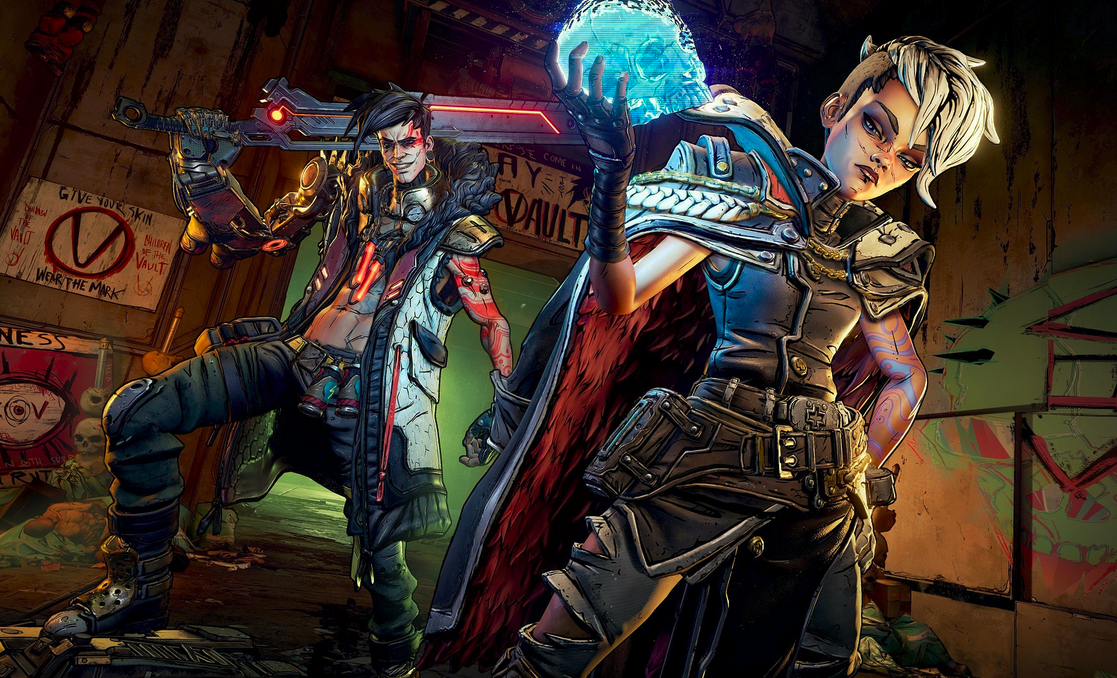
In many cases, I draw connections between real-world religious themes, rituals, and concepts with what one can find in Borderlands. Admittedly, this effort can be occasionally more speculative, but nonetheless, I believe it is interesting for bringing real-world religions into the analyses and discussion. Two examples include comparing the valuable Eridium that can be absorbed by sirens (of Borderlands; not the ones of Greek myths, although more about them later) in order to enhance their powers with ambrosia consumed by the Greek deities and the character Maya’s ability to Phaselock, her background, and name as paralleling the Buddhist and Hindu religious concept of maya (illusion).
Part 2 forthcoming.
References
Bosman, Frank G. 2019. Gaming and the Divine: A new systematic theology of video games. Oxfordshire, England: Routledge.
Butterworth, Scott. 2014. The ‘Extremely Deep Hidden Theme’ of Borderlands. Available.
Ferdig, Richard. 2014. “Developing a Framework for Understanding the Relationship Between Religion and Videogames.” Heidelberg Journal for Religion on the Internet 5:68-85.
 Bishop's Encyclopedia of Religion, Society, and Philosophy
[…] ammunition and weapons to players, as well as partaking in some narrative elements.See Part 1: Analyzing Religion in Borderlands: Intro, Overview, and Method See Part 3: […]